An AI that helps you learn to look at the image
The structured report takes the burden of manual labor off you so there is time left for what makes a radiologist: interpreting the image, mastering the classifications and communicating the finding. Always under your preceptor's supervision.
Seeing the report well organized into technique, analysis and impression helps you internalize radiological reasoning.
GUIDE suggests BI-RADS, Lung-RADS and TI-RADS for you to check against the image and lock in the criteria.
CRIT shows in practice how to communicate and document an urgent finding, with SLA and audit trail.
Less typing and reformatting; more minutes to look, compare and discuss the case.
The document is born assembled, the review stays in view and the signature closes the cycle. Hover over the animation.
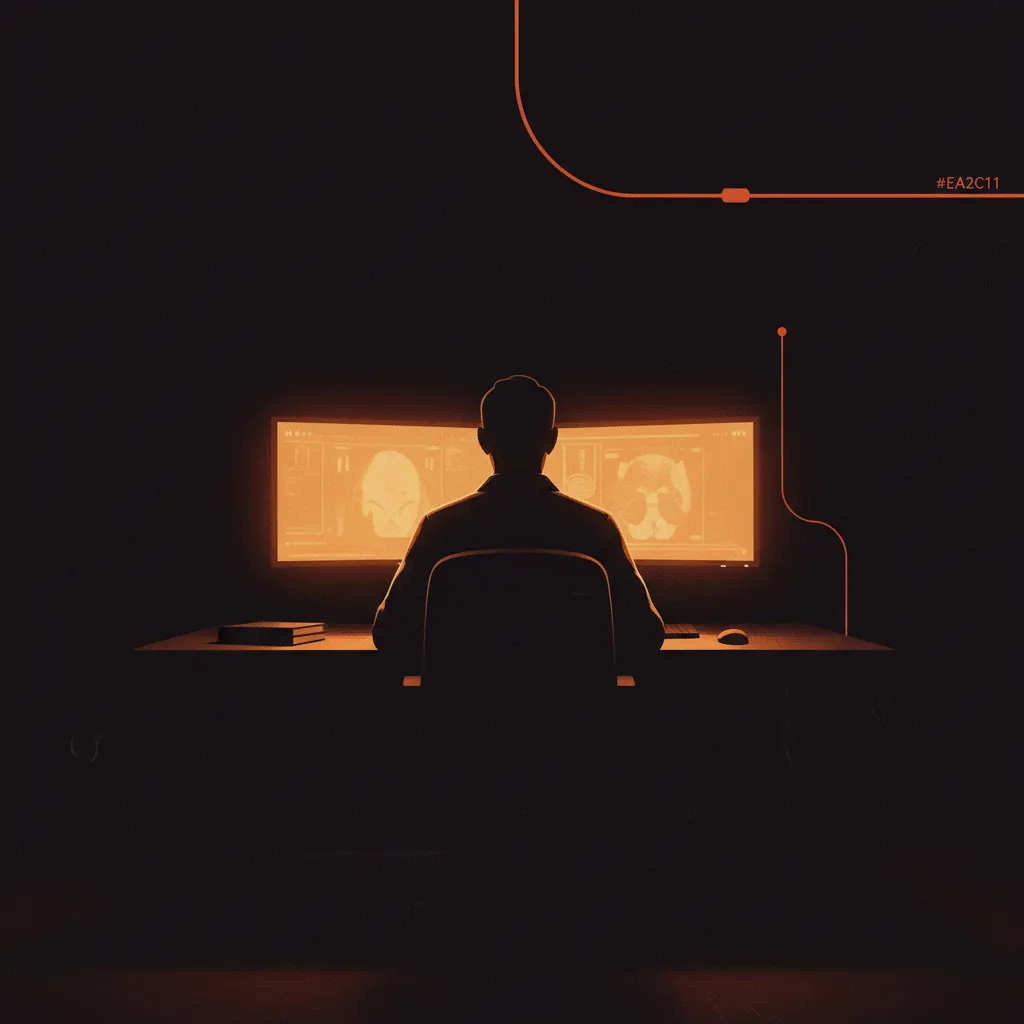
Residency is the time to learn to see. A good part of your day, however, goes to manual labor: typing, rearranging sentences, remembering the order of sections, formatting. That is time no longer available for what defines your training: looking at the image calmly, discussing with the preceptor and understanding why a finding is what it is.
Laudos.AI was designed to flip that equation. It handles the structure and the repetitive part of the text so you can invest your energy reasoning about the case. And it never decides for you: the ones who interpret, sign and are accountable are still you and your preceptor.
It is a scaffold, not a crutch. The idea is not for you to do less, but for you to learn faster by observing a good structure, reviewing each field and developing your own eye.
What you gain
Internalize the structure instead of memorizing it
With Laudos.AI, the report is born already organized by modality, in the technique-findings-impression format. By reviewing each section you repeat the good mental model dozens of times a day, until it stops being a checklist and becomes your natural way of thinking through the exam.
Learn the classifications in a real context
GUIDE suggests the appropriate category (BI-RADS, Lung-RADS, TI-RADS and others) based on the findings. You do not get a ready-made answer: you get a suggestion to check against the image and against the criteria, which turns each report into a small review of the classification systems.
Practice critical-finding communication
When a finding that requires immediate action comes up, CRIT organizes the notification with SLA and records the audit trail. You experience, in the routine, how a critical finding should be communicated and documented, a skill that is usually learned late and under pressure.
Less grunt work, more time with the image
REPORT turns your dictation into report text, taking care of formatting and repetition. The time you save is not for rushing out more reports: it is for looking at the image carefully, comparing with prior exams and talking with your preceptor.
- 01BEFORE
You read the image first
The reasoning starts with you and the image, as always. The tool comes in to give shape to what you observe, not to tell you what to observe. The clinical eye is yours.
- 02DURING
The structure builds itself while you reason
As you dictate through REPORT, the report organizes itself into sections and GUIDE suggests the relevant classifications. You review each field, correct what you disagree with and learn from a well-built structure right in front of you.
- 03AFTER
Your preceptor reviews and you close the loop
The report goes to your preceptor for supervision, which remains sovereign. The discussion gets richer because there was time left to think through the case, not just to type it.
The tool organizes the draft; training remains human
Residents do not learn by delegating the conclusion; they learn by making their own reasoning visible for discussion.
The flow starts at the image and ends at the preceptor's review. REPORT turns the resident's dictation into a readable structure and GUIDE brings the classification criterion closer, but none of these suggestions replaces checking the case. The preceptor remains responsible for questioning descriptors, correlation and impression, exactly where clinical learning happens.
The difference is that the discussion does not have to spend its first minutes fixing order, punctuation or formatting. Technique, Analysis and Impression arrive separated, and the divergence between what was suggested and what was decided can be examined. The tool serves as scaffolding: it helps expose the reasoning until the structure stops being external and becomes part of the resident's method.
That is why use in training needs a local rule. The program, the department and the preceptors define when the tool can be used, how the report is reviewed and which cases require direct discussion. Laudos.AI does not create competence, does not assess residents and does not turn speed into an educational indicator.
Observation and hypothesis belong to the resident; the tool comes in to structure what they described.
Classification and text can be accepted, adjusted or rejected on sound grounds.
The preceptor keeps the same clinical and teaching role they would have without the tool.
Turn each report into deliberate repetition
A consistent structure only teaches when the resident understands why each part exists.
At first, it is worth reviewing section by section: the technique matches the exam performed, the findings support the impression and the classification uses the right system for that context. Instead of accepting the entire text because it seems well written, the resident compares each choice with the image and with the criterion. It is this breakdown that reduces uncritical dependence.
Disagreements deserve to be recorded and discussed. If the suggestion failed, the group needs to distinguish a transcription error, an incomplete description, an inadequate rule or a different clinical interpretation. The goal is not to raise the rate of agreement with the AI; it is to raise the ability to explain the decision. When the tool is unavailable, the method has to keep standing.
Time saved also needs a destination. In training, the best use of the slack is comparing the prior exam, consulting the guideline and discussing the case, not just speeding up the queue. The program decides how to fold that time into teaching and how to keep productivity from replacing learning.
Who approves it and what to assess before using it
Educational use involves program coordination, preceptors, IT and the same sensitive-data rules as the rest of the department.
The purchase should not fall on the individual resident when the use is part of the program. Coordination and preceptors define the teaching objective; IT and the DPO assess access, integration and data processing; clinical leadership confirms the review and signature flow. A pilot can start with a small group, defined modalities and cases in which supervision is available.
The right indicators are not just time and volume. The program can look at structural completeness, quality of discussion, frequency of and reasons for disagreements and the safety perceived by the preceptor. If the tool improves form but impoverishes reasoning, the deployment needs to be revisited. The decision to expand belongs to the department, with evidence from its own routine.
In training, speed never replaces image interpretation, case discussion and the preceptor's supervision.
Different roles,
explicit controls.
Illustrative scenarios, not testimonials or observed results.
The physician provides the findings and keeps full control over review, editing, validation and signature.
The resident checks each suggestion against the image and the criteria; the preceptor defines supervision and limits.
The institution validates template, permissions, integration, data, contingency and metrics before production.
Honest questions
Won't this make me lazy and dependent on AI?
That is a risk we take seriously. That is why the tool suggests and organizes, but never concludes for you: every finding and every classification needs your check against the image. Used this way, it becomes guided repetition of good method, which is how one learns, and not a shortcut that skips the reasoning.
Does my preceptor's supervision stop making sense?
Not at all. It remains sovereign, and training demands even more than the regulation does. The assisted report goes through your preceptor as always; what changes is that the conversation can focus on clinical judgment rather than formatting.
What if the AI's suggestion is wrong?
It can be, and recognizing that is part of learning. Treat every suggestion as a hypothesis to be checked against the image and the criteria. Disagreeing on sound grounds is exactly the skill residency should develop in you.
See how Laudos.AI supports residents without replacing the preceptor or your judgment. Talk to us and see the platform in the real workflow of someone learning to report.