Lower-limb venous Doppler
Structure, measurements and review points for the vascular report.
Open guide →The image is the exam; the report is the deliverable. The report is where information becomes clinical management. A good report is structured, compared, communicated and signed responsibly.
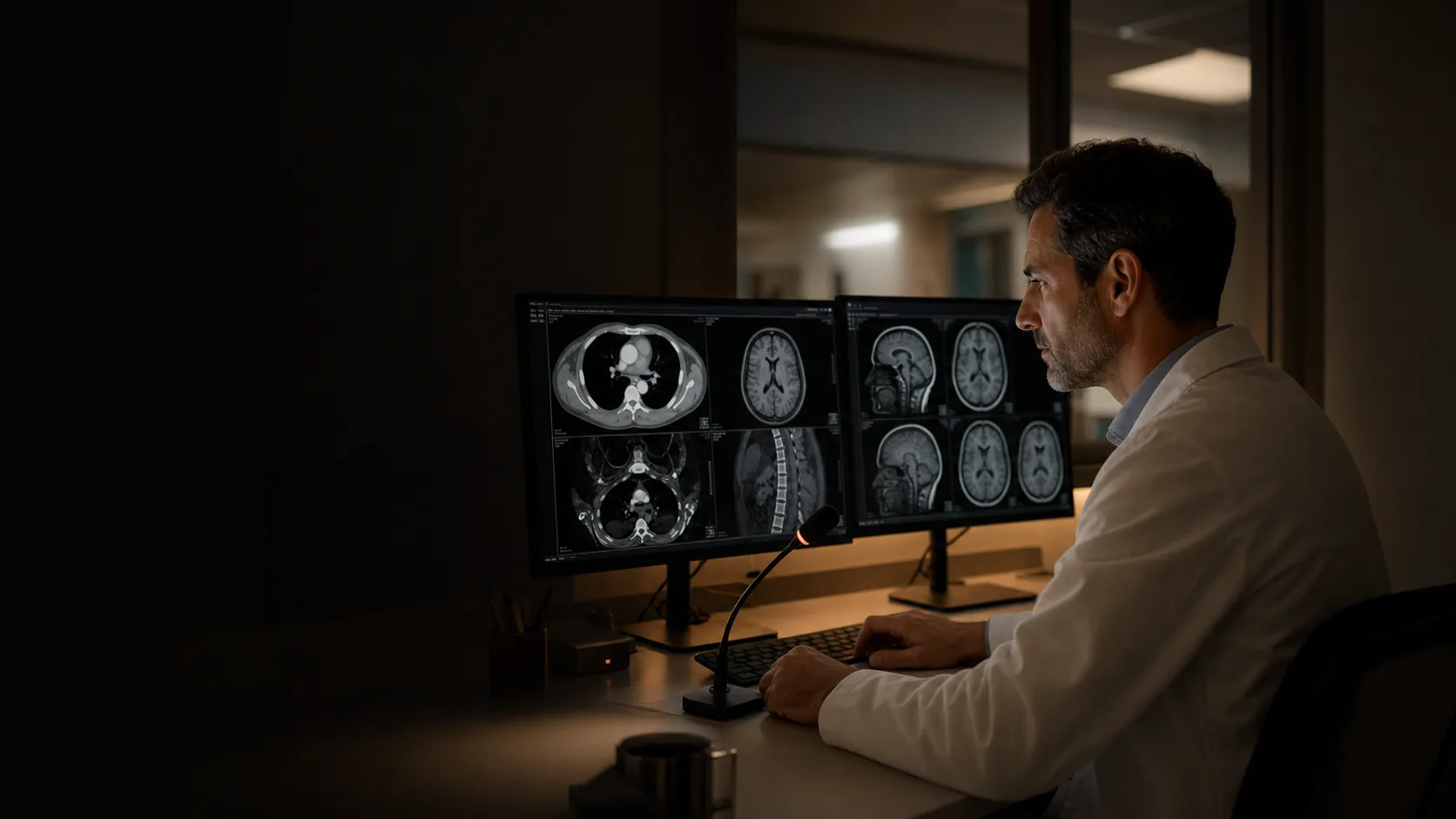
Technique, findings and impression where they are expected. Whoever reads finds them; whoever audits compares; whoever does research can extract data.
Stable, larger or new: without the prior, a finding loses half of its clinical meaning. A good report places it in time.
The right term reduces ambiguity and increases interobserver agreement. Standardized classification when the case calls for it.
A critical finding requires active communication with a deadline and a record, not a screenshot in the on-call group chat.
The report is a medical act. AI can structure and suggest; the decision and the signature belong to the radiologist.
TAT is a clinical metric, not operational vanity: a report that arrives late changes management less.
Access specific guides with structure, terminology and review points for common exams.
Structure, measurements and review points for the vascular report.
Open guide →Breast composition, findings, BI-RADS and structured communication.
Open guide →Technique, systematic analysis and impression for brain MRI.
Open guide →Structure for emergencies, hemorrhage, ischemia and mass effect.
Open guide →Lungs, airways, pleura, mediastinum and structured impression.
Open guide →Nothing above requires AI; everything above gets easier with it. Structuring what the radiologist dictates in real time, pulling the prior automatically, suggesting the classification with the criterion cited, turning the critical finding into a protocol with a record: it is layer work, not replacement.
The measured result of this layer, in production: a median of 52 seconds from editor to signature, with 54.6% of reports going out in under a minute and an average of 3 to 5 minutes in complex cases. The time goes back to the image and to the difficult case.
Structure organizes the predictable; the unpredictable is still written freely within it. The evidence associates structure with greater completeness, not less nuance.
If there is AI in the workflow, the resolution calls for meaningful human supervision and documentation of its use. In practice: the physician reviews and signs, and the exam log demonstrates it.
For the radiologist, the report organizes reasoning and communication. For the requester, it needs to deliver findings and impression without ambiguity. For the institution, it needs to preserve standard, authorship, version and delivery path. A good document serves all three without forcing the physician to work as a formatter.
Structure helps when it reduces omission and rework; it gets in the way when it becomes a rigid form. The design adopted here uses the template as a starting point, allows exceptions and keeps the review open until signature. What the AI suggested and what the physician decided remain distinguishable in the audit trail.
Those who report on their own can start with their own templates on the individual plan. A clinic, hospital or teleradiology service also needs to evaluate integration, permissions, shared templates, CRIT and operations metrics. The same editor takes part in both scenarios, but governance and accountability change when the report stops being one person's work and becomes an institution's process.
Live demo with your exam types and your institution's template, right in the product.
There are 5 pages published in this section, and each one opens directly, with no sign-up and no paywall. All sections
To bring together the pages by modality and exam, with what the report for that study needs to cover. Who publishes
Yes. Editorial responsibility lies with a radiologist registered with CRM-SP, and each page shows the date the content last changed. Who signs
No. The material supports the decision of whoever writes the report. The finding, the clinical correlation and the management remain with whoever signs the exam. Clinical governance