Less typing, more image. You dictate, review and sign.
Laudos.AI turns your dictation into a report already structured in your standard, always visible for review, always under your authorship. The AI handles the text; the decision remains yours.
The report is yours: your language, your standard, your signature. The AI never closes a report for you.
Every generated passage stays in view for you to check, edit and approve before signing.
Dictating instead of typing takes the weight off the keyboard and returns your attention to the image screen.
The text comes out already structured in your template, without reformatting, without starting from scratch on every exam.
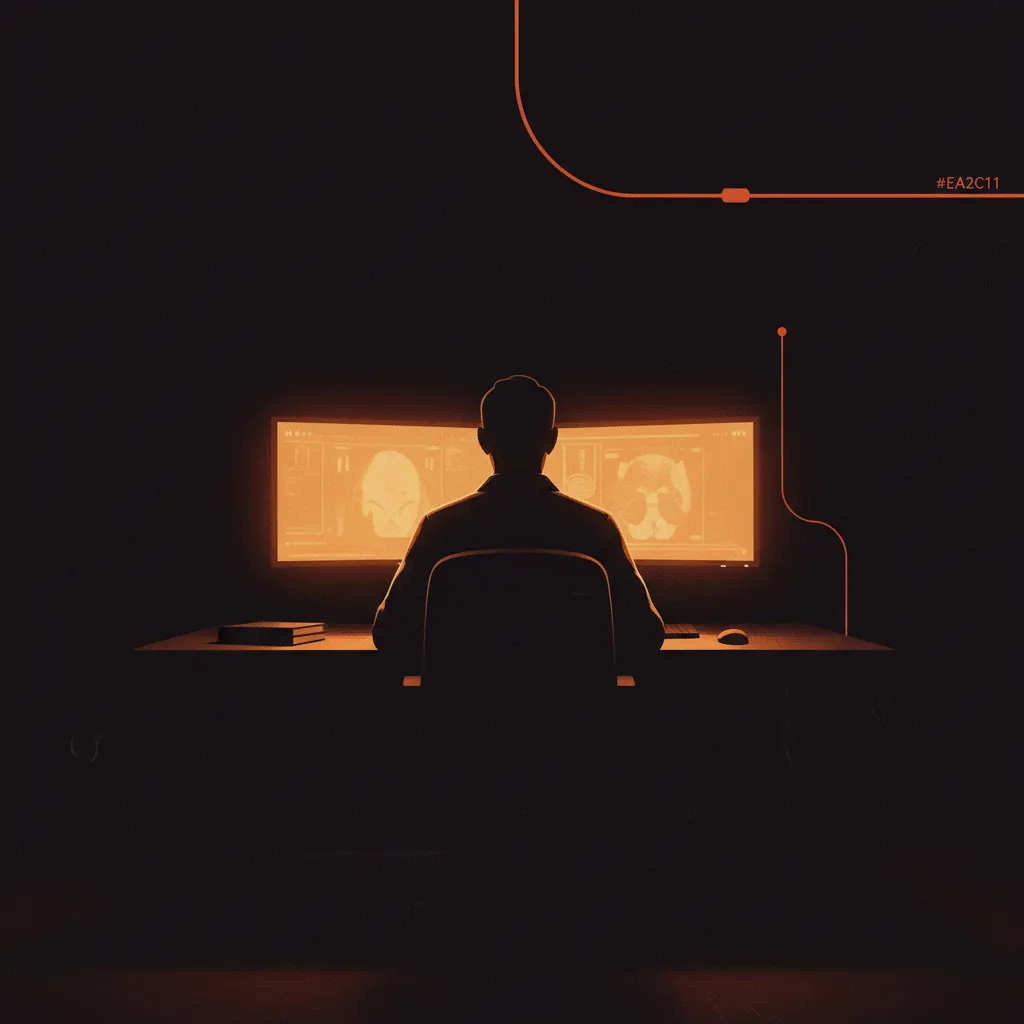
The document is born assembled, the review stays in view and the signature closes the cycle. Hover over the animation.
You did not choose radiology to spend the day typing. You chose it for the image, for the reasoning in front of a finding, for the reading that only your experience makes. But today's workflow charges a high price: hours at the keyboard, repeated formatting, the same text rewritten case by case and, at the end, a screenshot of the finding sent in a rush over WhatsApp.
Laudos.AI exists to give that time back. You dictate naturally and the report is born already structured in your template, in your language. Nothing is sent or finalized without passing before your eyes: the review is always in view, and what goes out with your signature was decided by you.
Let us be clear about the role of each. The AI drafts, organizes and suggests; you read, correct and sign. It amplifies your work; it does not replace it, nor does it try to.
What you gain
Dictation comes out already structured in your standard
With REPORT, you speak and the report is born organized in your template by modality, technique, findings, impression. No manual formatting, no pasting blocks of text. What used to be typing becomes review.
You decide and sign, always
Nothing is finalized automatically. The report remains an editable draft until you approve it. You keep full control over every sentence, in line with the meaningful human supervision that CFM Resolution 2.454/2026 requires.
The critical finding leaves WhatsApp and becomes a process
With CRIT, the critical finding is recorded, notified with SLA and audited, instead of a screenshot sent in a rush. You communicate with traceability and return to the next read without carrying the worry.
Classifications and structure at your side
GUIDE suggests established classifications when they make sense and LaudAI keeps the report structured by modality. These are aids you accept, adjust or ignore; the final word is always yours.
- 01BEFORE
Open the exam and dictate
You analyze the image as always and dictate the reading naturally. No need to pause to think about formatting or to remember the order of your template; that is already built in.
- 02DURING
Read, correct, adjust
The report appears structured in your standard. You review each section in view, correct whatever you want and refine the impression. The AI proposes; you lead.
- 03AFTER
Sign and communicate
With the report done your way, you sign. If there is a critical finding, it is notified and audited by CRIT, with no screenshot, no rush, and a record of who was notified and when.
Start with the way you report, not with a generic setup
The first validation is simple: the draft has to sound like yours and make the review shorter, not more confusing.
Setup starts from the templates you already use and the order in which you usually describe each modality. In the first exams, speed is secondary: check whether Technique, Analysis and Impression land in the right place, whether measurements and laterality are clear and whether the text preserves your terminology. The corrections made at this early stage serve to calibrate the flow.
Then test where you actually work. Noise, microphone, browser, shortcuts and editor position affect the experience, so a polished demo is not enough. Use routine and complex cases, note when you had to touch the keyboard and time how long it takes to review and sign. The gain has to show up at your workstation and on your shift.
Review is not an exceptional step reserved for difficult cases. The draft remains visible in every case, and nothing is finalized without your action. The tool takes on structure and repetition; authorship, clinical correction and signature remain yours.
The starting point is the template you already use for each modality.
The on-call workstation counts for more than the demo computer.
Include dictation, correction and review; fast transcription alone does not solve the workflow.
Individual for those who report; institutional for those who run operations
Volume is part of the difference. Shared responsibility is the other part.
The individual plan is the entry point for the radiologist who wants to start without a purchasing process: REPORT, GUIDE and your own templates, for R$ 299 per month for up to 1,000 reports. The new-user trial lets you set up your templates, with no card and no automatic charge, for 14 days or 30 reports, whichever comes first.
When there is a team, the problem comes to include access administration, the institutional template, the critical-finding protocol, dashboards and governed integration with RIS and PACS. At that point, adding up individual accounts is not enough: you need to define owners, permissions, support and audit trail. The volume-based plan exists for that operation.
This separation also protects expectations. Someone who reports alone does not need to buy a corporate deployment. Someone responsible for a clinic, hospital or teleradiology service should not receive a personal-use solution for an institutional risk.
Time saved only counts if the report remains yours
The goal is to remove operational work, not to reduce clinical attention.
The median of 52 seconds from editor to signature and the 54.6% rate under one minute describe measured use in production; they do not guarantee that every exam or every radiologist will repeat the number. Modality, complexity, template quality and experience influence the result. That is why the relevant comparison is your own workflow before and after.
Beyond time, note how much text had to be redone, whether the template stayed consistent, whether the classifications helped the review and whether you finished the shift with less window switching. Gaining seconds while increasing uncertainty would not be a gain. The tool only delivers on its purpose when the review stays clear and authorship remains perceptible in every line.
If after the trial period the workflow does not reduce friction in your environment, canceling is a valid answer. The product has to stand on the difference that shows up on the shift, not on how hard it is to leave.
The workflow should reduce textual operations without taking interpretation, review, editing, validation or signature away from the radiologist.
Different roles,
explicit controls.
Illustrative scenarios, not testimonials or observed results.
The physician provides the findings and keeps full control over review, editing, validation and signature.
The resident checks each suggestion against the image and the criteria; the preceptor defines supervision and limits.
The institution validates template, permissions, integration, data, contingency and metrics before production.
Honest questions
Will the AI write the report in my place and will I lose control?
No. The AI writes a draft from your dictation, and it stays editable and visible until you approve it. No report is finalized or signed without your decision. You remain the author; the tool only takes on the mechanical part of typing.
And what if the generated text has an error I do not notice?
That is why review is always visible, and never hidden. The workflow is designed so that you read what you are going to sign, the opposite of blind automation. The AI speeds up the drafting; clinical checking remains yours, as required by the meaningful human supervision of CFM Resolution No. 2.454/2026.
Will I have to abandon my reporting standard and adapt to the tool?
Quite the opposite. Laudos.AI adapts to your standard for each modality, to your language and to your structure. The goal is for the report to come out similar to what you already write, only without the effort of typing and formatting.
Book a demo and dictate a real case: watch the report take shape structured in your standard, with the review in view and the signature under your control. No commitment, at your own pace.